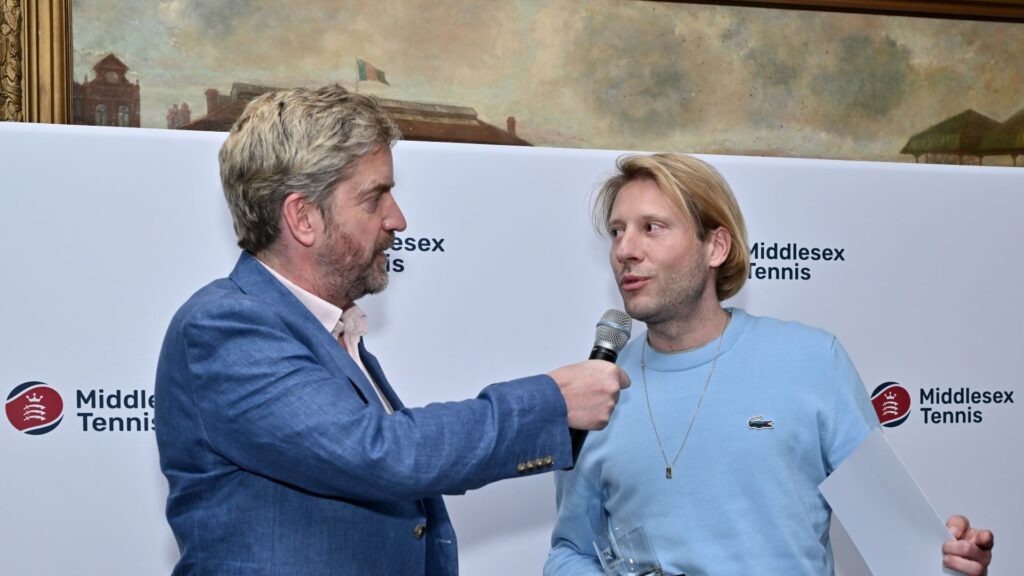
Six months after being recognised as Middlesex Official of the Year, we catch up with JP to find out what the award means to him. He explains how it has influenced his career and why he believes more needs to be done to support the next generation of tennis officials.
Q: Six months after receiving your award, how do you feel about winning it?
JP: I’m still really proud of winning the award, particularly because it recognised both my on-court and off-court work as an official. It means a lot to receive that recognition from a county I’ve really enjoyed working for. It has reinforced my connection with Middlesex and my sense of belonging.
I’ve been trying for years to support the county in different roles, and I’m really proud of Middlesex. I’m still carrying that feeling of pride six months on.
Q: Has winning the award opened up any new opportunities or experiences for you?
JP: I mainly work the Junior events at Queen’s, so that hasn’t changed much, but it’s been lovely to hear from parents and fellow officials who have found out about the award.
Refereeing and officiating opportunities with the LTA are very competitive, so I think the recognition may help when I’m applying for roles. I’ve added the award to my CV and LinkedIn profile, and I’m sure it will make a difference when candidates have similar experience.
Even if it doesn’t directly lead to a new opportunity, being recognised by Middlesex is something that strengthens my professional profile.
Q: What has been your proudest moment since winning the award?
JP: There have been a couple of moments when people have mentioned it unexpectedly. One that stands out was during a tournament with around 24 events and more than 200 entries.
As you can imagine, managing a tournament of that size can be challenging, particularly when dealing with parents. One parent reminded another that I was Middlesex Official of the Year and was therefore likely to know what I was doing!
It was quite funny, but also really nice. Moments like that make you feel proud and show that the award has made an impression.
Q: Has the award changed how people view you as an official?
JP: I think it has. In refereeing, it’s easy to work independently without building many connections with other officials. Networking can be difficult, particularly when you’re younger than many of the people in the room.
Sometimes people see a younger official and assume they haven’t got much experience. Being able to say you’ve won an award like this helps demonstrate your experience and credibility.
I’ve also recently achieved my Level 4 tennis coaching qualification, which I’m delighted about. Both are important professional achievements, but having my work recognised by the county means just as much to me.
Q: You mentioned that many tennis officials are older and that there don’t seem to be many younger people coming through. What are the challenges facing aspiring referees?
JP: It’s a difficult area, and there are several reasons why it can be hard to build a career in officiating.
The financial side is a major challenge. I can earn more from two hours of coaching than from a full day of officiating, even before accounting for the administration required to organise a tournament. Most coaches are unlikely to want to take on that additional workload when coaching offers better financial opportunities.
Tournament organisers also face tight margins. Even when entry fees are relatively high, the costs of courts, balls and staffing can leave very little profit. That makes it difficult to deliver events to the standard everyone wants.
There are also practical challenges around tournament administration, scheduling and withdrawals. Officials need to manage entries, communicate with players and parents, book courts and ensure everything runs smoothly, often with very little time to prepare.
I regularly attend networking events where many of the officials are over 60. There are some younger people doing excellent work, and I hope they receive more support, but the barriers are significant.
Q: What do you think could be done to encourage more people into officiating and help them stay in the sport?
JP: I think there are some straightforward opportunities to make a difference.
Better support for tournament organisers would help, particularly with the cost of tennis balls and other essential equipment. Sponsorship of local competitions could also make events more financially sustainable and help organisers deliver a better experience for players.
We need to make officiating more attractive as a professional option, particularly for younger people and coaches who might otherwise see it as an additional responsibility with little financial reward.
I also think the balance between supporting players and supporting officials needs attention. Officials have a difficult job, and they need appropriate support when dealing with complaints and challenging situations.
Tennis has a strong participation base, and people invest a great deal in playing the sport. We should be looking at how that investment can also help support the people who make competitions possible.
Q: What advice would you give to someone thinking about putting themselves forward for an award?
JP: Don’t hesitate, and don’t overthink it!
Any testimonial from a parent, player, colleague, coach, supervisor or competition organiser who is willing to support your nomination can make a difference. It’s worth putting yourself forward and allowing people to recognise the work you’ve done.
These awards are particularly valuable because officiating doesn’t always receive much recognition in other ways. Middlesex is one of the leading counties in the country, and we need to encourage and recognise more people who contribute to the sport, especially as we need more referees coming through.
Q: Looking ahead, what’s next for you?
JP: I’m keen to continue progressing as a referee, including working towards my R1 qualification and White Badge. There are limited places on the relevant courses, so it’s competitive, but I’m keen to keep developing.
I’m also passionate about officiating in disability tennis, particularly para-standing tennis and learning disability tennis. That’s one of the reasons I received the award, and it’s an area I want to continue supporting.
Alongside that, I’ve achieved my Level 4 coaching qualification, so I’m looking at how I can continue developing both sides of my career.
Longer term, I may move to France, although whether that happens next year or in five years is still uncertain. I’d like to establish a real tennis club there, supported by lawn tennis and padel to help make the business sustainable. Real tennis is relatively unknown, so it would be important to introduce people to the sport and build participation over time.
My coaching and officiating qualifications will be important to that ambition, although transferring qualifications between countries can be challenging.
Q: Finally, what does Middlesex Tennis mean to you?
JP: Tennis has always been my first love. I previously worked in the media industry in finance for a decade, and shortly before COVID, I decided to risk it all for the love of tennis. I am so lucky to have found so many opportunities in tennis / padel in West London. I’ve loved being part of Middlesex.
There’s a great team, and the county does some fantastic work. Winning the award has strengthened my connection with Middlesex, and I’m proud to have contributed to the county and to the wider tennis community.
I’m looking forward to continuing that work, developing as an official and helping more people enjoy the sport.
Snapshots

Deadline for Nominations for the LTA Awards
Don’t forget you still have time to nominate.

Deadline is 30th November – Nominate Now!
More photos from the 2026 LTA Awards.